

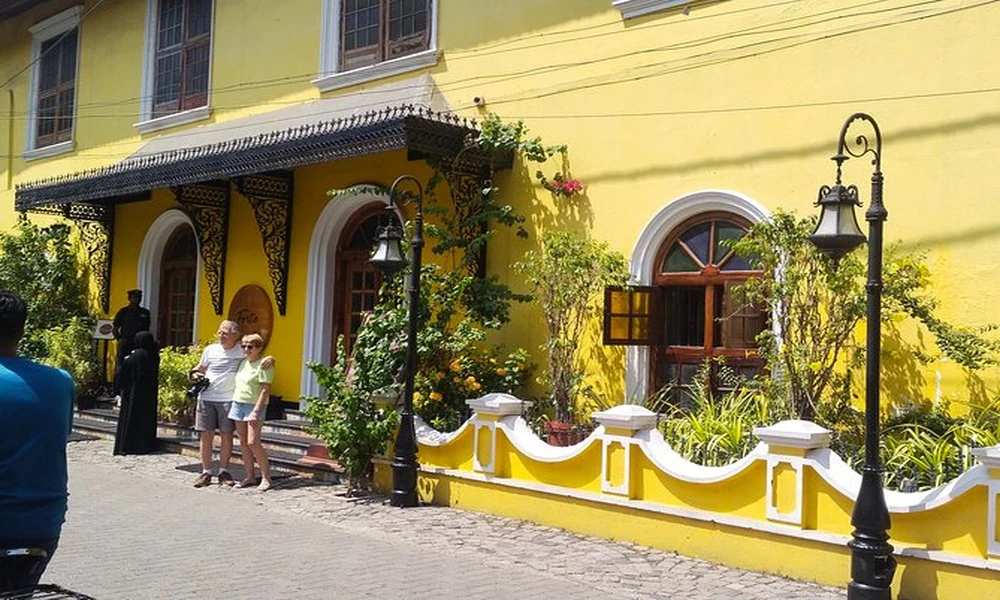
A walk through Fort Kochi takes in the Chinese fishing nets on the waterfront, the 1503 St Francis Church, Santa Cruz Basilica, and the colonial streets, then crosses to Mattancherry for the Dutch Palace murals and the Paradesi Synagogue in Jew Town. Allow half a day, and mind which sites close on Fridays.
Where does a Fort Kochi walk begin?
Start at the waterfront, where the Chinese fishing nets, the cheena vala, lean out over the harbour mouth. These cantilevered nets, worked by teams of fishermen, are the image everyone comes for, best at sunrise or sunset when the light is low. Be honest with yourself about two things, though. The catch-and-cook stalls beside them, where you buy fish and have it fried on the spot, are overpriced and aimed squarely at tourists. And the net platforms are old and not all well maintained. One collapsed in November 2025, with a group of visitors on it narrowly avoiding injury (Onmanorama, November 2025), so watch your step and do not climb onto a platform without the fishermen’s say-so. Vasco da Gama Square runs behind the nets, with snack carts and the start of the old streets.
What can you see around the fort?
A short walk inland brings you to St Francis Church, built in 1503 and one of the oldest European churches in India. Vasco da Gama was buried here after he died in Kochi in 1524, and his remains lay in the church for about fourteen years before they were taken to Lisbon (Wikipedia). A few minutes away stands Santa Cruz Cathedral Basilica, its interior painted end to end. Around them lie the Dutch Cemetery, Princess Street, one of the oldest streets in the quarter, and rows of Portuguese, Dutch and British houses now turned into cafes and homestays. The old spice warehouses nearby host the Kochi-Muziris Biennale, India’s biggest contemporary art show, every couple of years. The sixth edition ran from December 2025 to March 2026 at Aspinwall House and venues across the area, and the next edition returns in the same way.
How do you get to Mattancherry and Jew Town?
Mattancherry sits about three kilometres south of the fort. You can walk it in forty minutes along the harbour, but most people take an auto-rickshaw, which is quick and cheap. This is the older trading heart of Kochi, where the spice trade, the Dutch and the Jewish community all left their mark. Two sights anchor it, and both have rules worth knowing before you arrive.
What are the rules at the Dutch Palace and the Synagogue?
Mattancherry Palace, known as the Dutch Palace, was built around 1555 by the Portuguese as a gift to the Raja of Kochi, and later restored by the Dutch. Its draw is the 16th-century murals, among the finest in south India, with Ramayana scenes in the old bridal chamber. It is closed on Fridays, open roughly nine to five on the other days, charges a small entry fee, and does not allow photography inside the mural rooms (as of 2026). A short walk on, in Jew Town, the Paradesi Synagogue was built in 1568 and is the oldest functioning synagogue in the Commonwealth. It is closed on Fridays and Saturdays and on Jewish holidays, opens roughly ten to noon and three to five, charges about five rupees, and does not permit photos in the prayer hall. You remove your shoes at the door (as of 2026). Plan around those closed days, because turning up on a Friday means both interiors are shut.
How do you reach Fort Kochi, and when should you go?
Fort Kochi is a peninsula reached from the mainland at Ernakulam. The classic way is the passenger ferry, and the newer Kochi Water Metro now runs air-conditioned boats across from the High Court Junction side, which is a fine arrival in itself. By road it is about forty kilometres from Kochi airport (COK, Cochin), under two hours in normal traffic. The comfortable months are roughly November to February, cooler and drier. The walk is hot and humid in April and May and wet through the June to September monsoon. Go early in the day for the light and the quiet, and save Fridays for the outdoor parts, since the palace and the synagogue are both closed then.
A Fort Kochi walking route at a glance
The table runs the walk in order, from the waterfront to Jew Town, with the one detail that decides each stop.
| Stop | Highlight | Note |
|---|---|---|
| Chinese fishing nets | Waterfront cheena vala at dawn or dusk | Aging platforms, watch your step |
| St Francis Church | Built 1503, da Gama’s first grave | Usually open daily |
| Santa Cruz Basilica | Painted colonial cathedral | Open daily |
| Mattancherry Palace | Ramayana murals | Closed Fridays, no photos inside |
| Paradesi Synagogue | Jew Town, built 1568 | Closed Fri and Sat, no photos in hall |
| Jew Town | Antique and spice shops | Best late morning; prices are tourist-level |
Frequently asked questions
How long does a Fort Kochi walk take?
Half a day covers the main sights at a relaxed pace. The fort area, with the fishing nets, St Francis Church and Santa Cruz Basilica, takes about two hours. Add an hour or two for Mattancherry and Jew Town, three kilometres south, plus the short hop across by auto. A full day lets you linger in the cafes and shops.
Which day are the Fort Kochi sights closed?
The Dutch Palace in Mattancherry is closed on Fridays, and the Paradesi Synagogue is closed on Fridays and Saturdays and on Jewish holidays. The outdoor sights, meaning the fishing nets, churches and streets, are open any day. If you only have one day, avoid a Friday so you can see both interiors.
Can you still see the Chinese fishing nets in Fort Kochi?
Yes, the nets are still worked at the waterfront and remain the signature sight. The platforms are old and not all well kept, though, and one collapsed in November 2025, so watch your step and do not climb on without the fishermen’s permission. Sunrise and sunset give the best light.
How do you get to Fort Kochi?
From Ernakulam on the mainland, take the passenger ferry or the Kochi Water Metro, which runs air-conditioned boats across the harbour. By road it is about forty kilometres from Kochi airport (COK). Within Fort Kochi, walking and auto-rickshaws are the easiest ways to get around.
Is Fort Kochi worth visiting?
Yes, for its layered history. Few places pack Portuguese, Dutch, British and Jewish heritage into one walkable quarter, alongside the fishing nets, old churches, the Dutch Palace murals and an art biennale. Set honest expectations at the catch-and-cook stalls, which are a tourist trap, and the rest rewards a slow morning.
When is the best time to visit Fort Kochi?
Roughly November to February is the most comfortable, cooler and drier. April and May are hot and humid, and the June to September monsoon is wet. Early morning is best in any season, for the soft light on the nets and the quieter streets before the day warms up.
To know more information about Fort Kochi in Kerala, check out trip2keralam.com