

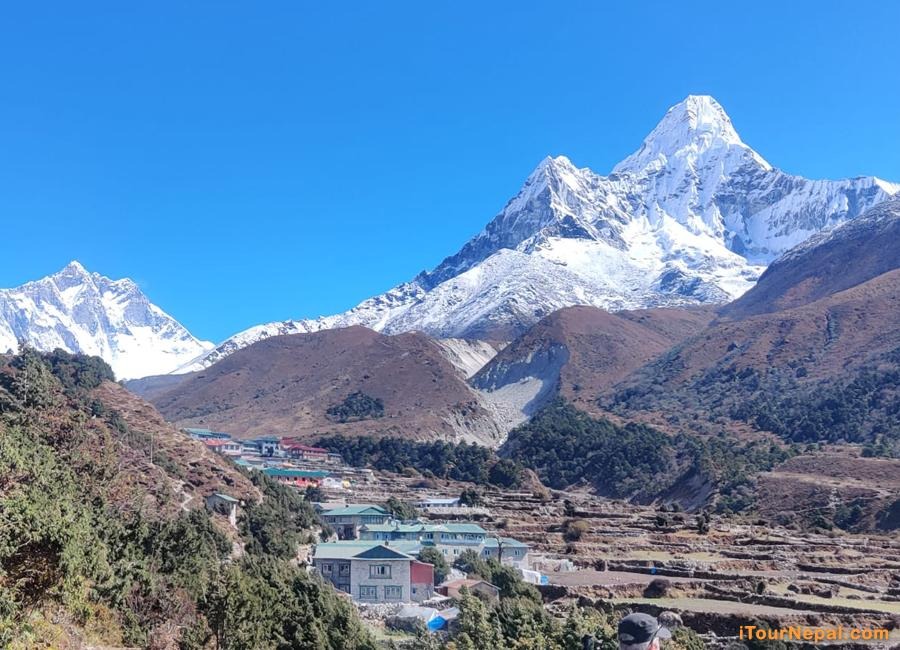
If the Himalayan adventure is on your bucket list, treks in the Everest and Annapurna regions probably ring a bell. Everyone falls into a dilemma for a while researching which trek to choose. Both regions offer breathtaking landscapes, rich culture, and a healthy dose of adventure, but each has its own rewards and challenges.
The Everest Base Camp trek is known for Mt Everest and Sherpa culture, while the Annapurna Base Camp trek traverses colorful rhododendron forests, Gurung villages and offers panoramic views of the Dhaulagiri and Annapurna ranges.
Here we have chosen the Annapurna Base Camp Trek and the Everest Base Camp Trek, for a friendly comparison to help you decide which Treks in Nepal fits your style and spirit best. Both treks have difficulties and prizes, but the choice between them often depends on available time, personal preferences and difficulty level.
The Big Picture: What’s the Trek Like?
Everest Base Camp (EBC) is about getting close to the highest mountain in the world and encountering the Sherpa people known as legendary climbers. The trekking route navigates the alpine valleys nestled between the world’s highest mountains and pristine glaciers, for which the national park is listed as a UNESCO World Heritage site. The trail passes through the charming Sherpa villages of Namche, Pangboche and then traverses the yak pastures, coming to several viewpoints.
The Annapurna Base Camp Trek starts from the subtropical regions, rich with lush forests and charming villages with farming terraces. The trail mostly winds through vibrant rhododendron forest and passes through mountain saddle villages of Magar and Gurung, offering enchanting views with warm hospitality. It finally enters the narrow valley wedged between Annapurna South and Mt Fishtail and comes to the Annapurna Base Camp surrounded by spectacular peaks of the Annapurna massif in 360 degrees.
The Heartbeat of the Trek: Landscape and Culture
The Everest trek dwells in the alpine zone since it starts with a flight to Lukla, which is at 2,800 m. The trail comes out of the tree line in a couple of days, and the landscape is mostly rugged and arid with a dramatic view. You will also encounter strong Tibetan Buddhist villages featuring Mani walls and traditional Buddhist entrances marked with murals and prayer wheels. Fluttering prayer flags, the strong smell of juniper incense and elegant monasteries make it culturally rich with a strong spiritual vibe.
On the other hand, the Annapurna Base Camp Trek is a tapestry of Nepal’s varied culture and environment. The trek starts from the lush subtropical region and then dwells through the high-altitude rhododendron forests for days before coming to the arid alpine zone closer to the base camp. It also unfolds cultural encounters with diverse ethnic groups, from Hindu villages to Gurung and Magar who practice Bon mixed with Buddhism and Hinduism.
Logistics and Difficulty: Who Is This Trek For?
The Everest Base Camp trek is typically a 9 – 13-days trek that starts and ends with a flight from Kathmandu and back. Walking hours last between 5 – 7 hours each day, climbing steadily. The Trek also includes two days of rest for acclimatization. The path is well-marked, popular, and supported by plenty of guesthouses and teahouses, with some offering the comfort of a soft bed and ensuite bathroom. But keep in mind the trail feels overcrowded in peak season, as the route follows the same way up and back.
The Annapurna Base Camp Trek can be done in 7 – 12 days from Kathmandu and back depending upon the routes, means of transportation and side trips you choose. While the walking hour per day is about 5 – 7 hours, the trail has steep ascents and descents, making it demanding. However, following the standard itinerary, you don’t need an extra day for acclimatization as the Annapurna Base Camp is only about 4,210 m. The trail is well marked and has plenty of teahouses along the way. Teahouses are limited beyond Chhomrong, so make sure to book in advance if you are travelling in peak season.
A Quick Guide: Pros and Cons
Everest Base Camp
Pros: Alpine landscape with Everest view, strong Tibetan Buddhist culture, well-supported trekking infrastructures
Cons: Can be crowded, expensive because of the Lukla flight and remoteness, Depends upon weather, More demanding
Annapurna Base Camp
Pros: Easy access that is less affected by weather, alternative routes available to avoid crowds, diversity and lushness, moderate in altitude.
Cons: Lots of ascents and descents, logistics are much simpler, crowded in Annapurna Sanctuary, more avalanche-prone areas.
Your Takeaway
Both treks offer unique experiences that cater to different preferences among trekkers. If you are looking for a culturally diverse, moderate trek in the vibrant landscape ranging from subtropical to alpine zones, the trek to Annapurna Base Camp is your trek. But if you crave to see Mt Everest and prefer a more demanding trek in the high altitude, the EBC trek is your go-to.
Both treks demand proper planning, thorough preparation, and a spirit of adventure. Whichever you choose, the Himalayas reward you with some of the most awe-inspiring experiences and unforgettable stories that will stay with you for a lifetime.